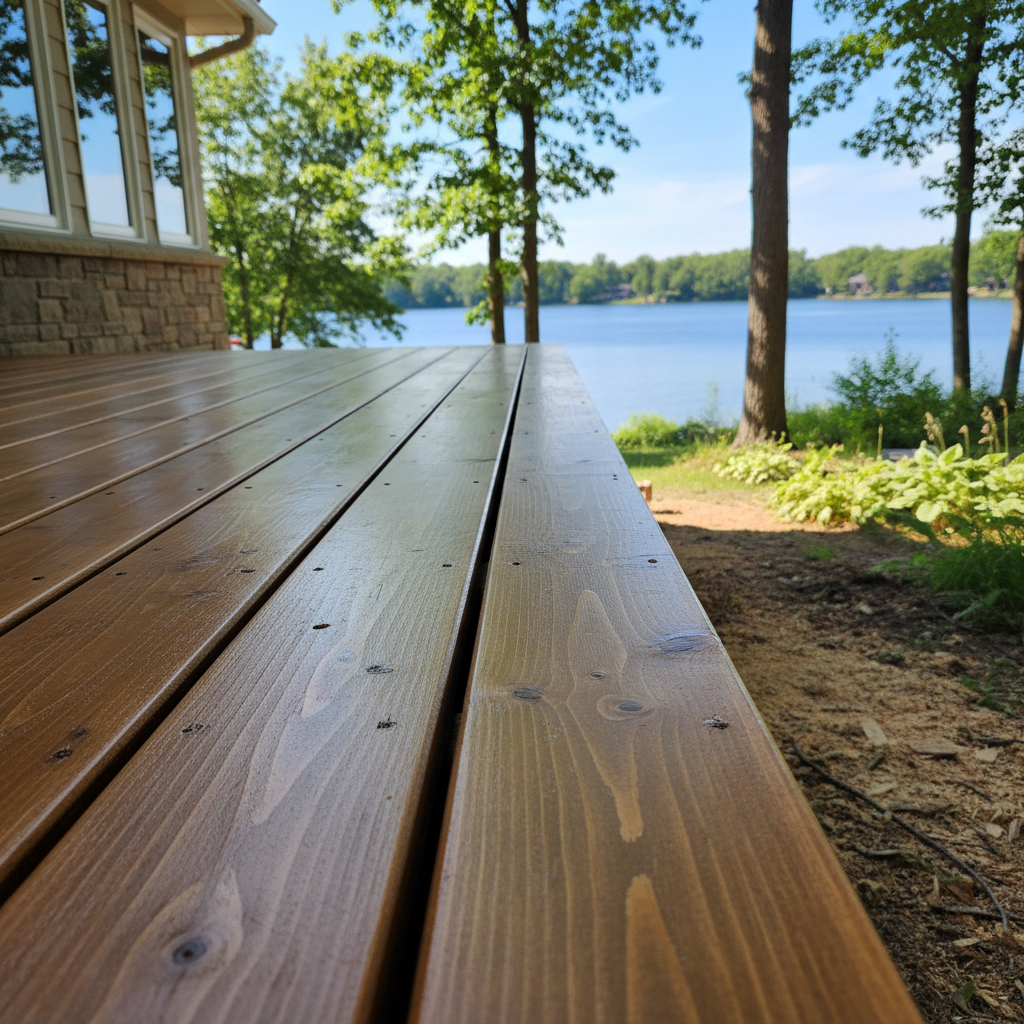
Alright, let's talk decks. Specifically, let's talk about keeping 'em looking good and protected here in Minnetrista. I get a lot of questions about staining and painting, and honestly, there's a lot of bad info out there. So, I figured I'd lay out the straight goods on what I've seen work and what doesn't, based on years of working on decks around Lake Minnetonka and the surrounding areas.
Do I need to stain or paint my deck? What's the difference?
Yep, you absolutely need to protect your deck. Leaving bare wood exposed to our Minnesota weather is just asking for trouble – rot, splinters, warping, you name it. The difference between staining and painting boils down to how they protect and how they look.
- Stains: These soak into the wood, protecting it while letting the natural grain show through. You can find them in clear, semi-transparent, and solid varieties. Clear and semi-transparent stains are great if you love the look of natural wood. Solid stains cover more of the grain, almost like a thin paint, but they still get absorbed. They're good for older decks where the wood might be a bit weathered, but you still want some wood texture.
- Paints: Paint sits on top of the wood, forming a thick, opaque layer. It completely hides the grain. Paint does offer excellent protection and can last a bit longer than some stains, but it's also more likely to chip, peel, and blister, especially on horizontal surfaces like deck boards that see a lot of foot traffic and sun. Once you paint, you're pretty much stuck painting again in the future; staining over paint is a whole different animal.
For most decks, especially new ones, I usually suggest staining. It just handles the wood's expansion and contraction better, along with the wear and tear from footsteps. Plus, it's easier to keep up with later on.
How often should I re-stain or repaint my deck in Minnetrista?
This isn't a simple answer, but generally, you're looking at every 2-3 years for semi-transparent stains, and maybe 3-5 years for solid stains or paints. A lot depends on the quality of the product you used, how much sun and weather your deck gets, and how well you prepped it the first time around.
Decks fully exposed to the sun and our harsh winters, like those on the west side of a house overlooking Lake Minnetonka, will probably need attention sooner than a deck that's mostly shaded. The best way to tell is to look for signs of wear: fading, peeling, or water not beading up on the surface anymore. Do a splash test: if water soaks into the wood instead of beading, it's definitely time.
What's the most important step for a good finish?
Hands down, it's the prep work. You can buy the fanciest stain or paint on the market, but if you put it on a dirty, mildewed, or poorly prepped surface, it's going to fail fast. I've seen it happen a hundred times.
Here's the basic rundown for proper prep:
- Clean it thoroughly: Use a good quality deck cleaner and a stiff brush. If you're using a pressure washer, be careful! Too much pressure can damage the wood fibers, making it fuzzy and harder for the stain to stick. Keep the nozzle moving and don't get too close.
- Remove old finish: If your deck has peeling paint or stain, you'll need to strip it or sand it down. This is absolutely crucial. New finish won't stick to old, failing finish.
- Brighten and neutralize: After cleaning, an oxalic acid-based deck brightener helps bring back the wood's natural color and neutralizes the cleaner. It also opens up the wood pores for better stain penetration.
- Let it dry completely: This is huge. The wood needs to be bone dry. In our humid summers, this can take a few days, even after a sunny spell. Staining wet wood will trap moisture, leading to peeling and mildew.
Don't skimp on the prep. It's the foundation for a long-lasting finish, period.
Can I change from stain to paint, or vice-versa?
You can, but it's a commitment. Going from stain to paint is easier; you'll still need to clean and prep thoroughly, and you might need a good primer, especially if the stain was oil-based. The paint will cover it completely.
Going from paint to stain is a much bigger job. You'll have to remove virtually all of the old paint. This usually means heavy sanding, chemical stripping, or a combination of both. If you don't get all the paint off, the stain won't soak in evenly, and you'll end up with a splotchy mess. Most folks find it's not worth the effort and just stick with paint if that's what they started with.
What kind of products should I use? Oil-based or water-based?
Both have their pros and cons. I've used 'em all over the years, and the technology keeps getting better for both. For Alpha Decks, we tend to favor certain products based on the specific deck and client preference, but here’s a general idea:
- Oil-based stains: These soak deeply into the wood, offering excellent protection and a rich, traditional look. They're very durable but can take longer to dry, and cleanup needs mineral spirits. They also tend to darken over time.
- Water-based (acrylic) stains: These are easier to clean up with soap and water, dry faster, and typically hold their color better over time. Modern water-based stains are very durable and flexible, resisting cracking and peeling better than older formulas. They're a good choice for most homeowners.
For deck paints, you're almost always looking at acrylic latex products. They're durable and flexible, designed to handle outdoor conditions. My advice? Don't cheap out. A good quality stain or paint from a reputable brand will save you headaches and re-do's down the road.
Can I stain or paint my composite deck?
No, you absolutely should NOT stain or paint a composite deck. Composite decking, like Trex or Azek, is made to be low-maintenance and doesn't need staining or painting. In fact, putting a traditional stain or paint on it will void your warranty and likely lead to peeling, flaking, and a real mess. If your composite deck is looking faded or dirty, there are specific cleaners for composite materials. If it's severely damaged or discolored, replacement might be your best bet, not a cover-up.
What about the weather? When's the best time to do this in Minnetrista?
Timing is everything here in Minnesota. You want stable weather, not too hot, not too cold, and definitely no rain in the forecast for at least 24-48 hours after you apply it. Spring and fall are usually your best bets.
- Spring (Late April - June): After the last frost and before the really hot, humid days kick in. Gives the wood time to dry out from winter.
- Fall (September - October): After the heat of summer has passed, but before freezing temperatures set in. You want to make sure the wood is dry and you have a good window of warm, dry days for curing.
Avoid staining or painting in direct, scorching sun, as it can make the product dry too fast, leading to lap marks or poor adhesion. Early morning or late afternoon on a mild, overcast day is often ideal. And always check the forecast – a surprise rain shower can ruin all your hard work.
Look, keeping up a deck is work, but it's worth it to protect your investment and keep your outdoor space looking great. If you've got more questions or need a hand with your Minnetrista deck, you know who to call.