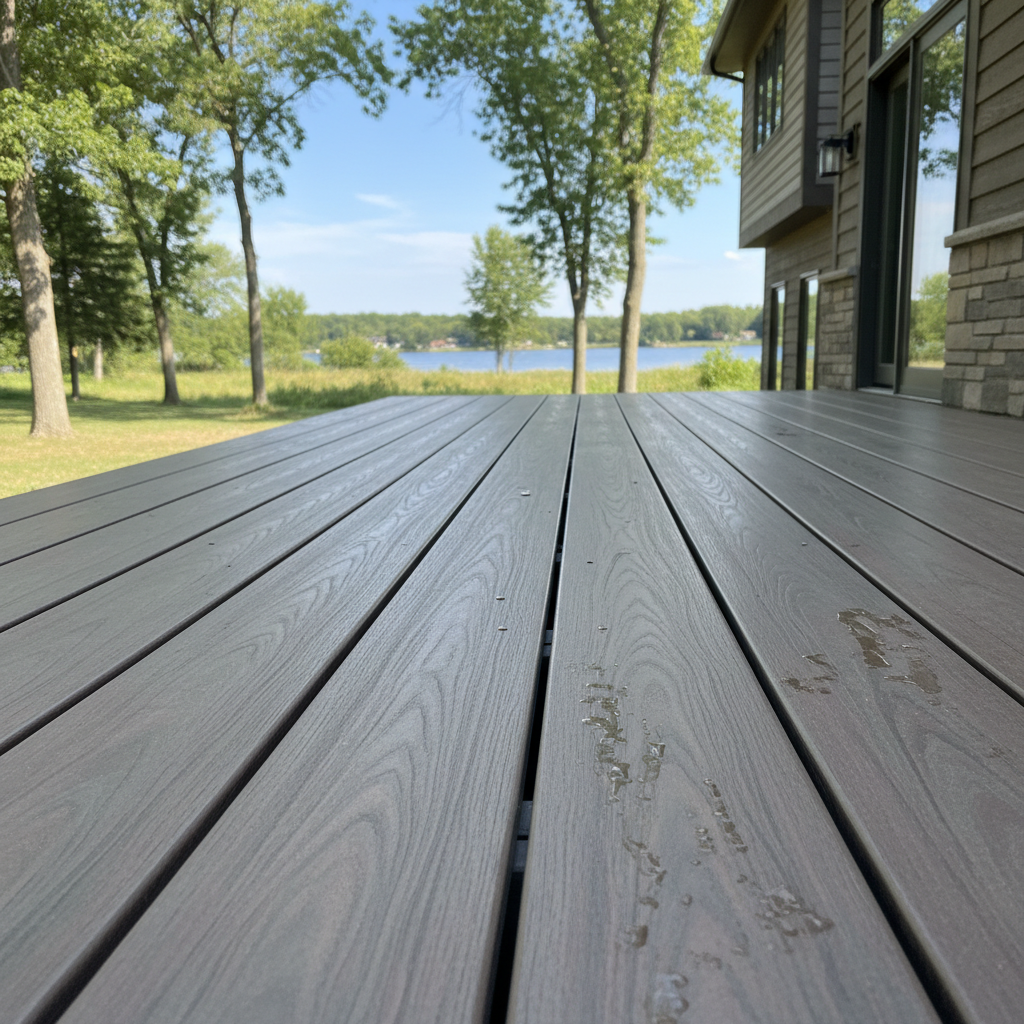
Do composite decks really get hotter than wood?
Yeah, they can. It's one of the first things folks ask me, especially when they're picturing those hot summer days by Lake Minnetonka. Some of the darker composite colors, especially in full sun, will definitely feel warmer underfoot than a light-colored cedar or pressure-treated deck. It's just how the material works; darker colors absorb more heat, right? Now, manufacturers are getting smarter about this. They're developing 'cooler' technologies, often with lighter pigments or special surface treatments, but you still need to be realistic. If you've got a south-facing deck that bakes all day, and you pick a deep charcoal gray, you're going to feel it. I always tell clients, if bare feet are a priority, consider lighter shades or think about where your deck will get the most direct sun. It's not a deal-breaker for most, but it's something to be aware of.
Will composite decking fade or stain over time?
Good question, and the short answer is: a lot less than wood, but it's not completely immune. Modern composite decking, especially the capped varieties, is designed to resist fading. The cap layer is usually UV-stabilized, meaning it's built to stand up to our harsh Minnesota sun without turning into a dull, washed-out version of its former self. You might see a very slight, almost imperceptible lightening over many years, but nothing like the graying you'd get with natural wood. As for staining, again, it's highly resistant. Things like spilled wine, grease from the grill, or even mildew are much easier to clean off composite than wood. That cap layer acts like a shield. That said, you shouldn't just let spills sit there for days, especially things like berries or strong dyes. A quick wipe-down usually does the trick. I've seen some older, uncapped composites get a bit dingy, but today's products are a different beast entirely.
What about mold and mildew on composite decks?
This is a common concern, especially with our humid summers and wet springs here in Minnetrista. While composite decking itself doesn't rot or get eaten by insects like wood, it can still develop mold and mildew on its surface. It's usually not growing in the material, but rather on organic debris that's settled on the deck – pollen, dirt, leaves, you name it. When that stuff gets wet and stays wet, mold spores find a happy home. The good news is, it's generally pretty easy to clean off. A good scrub with a deck brush, some mild soap and water, or a specialized composite deck cleaner usually takes care of it. Sometimes a pressure washer on a low setting can help, but you've got to be careful not to damage the surface. Regular sweeping and keeping your deck free of debris will go a long way in preventing it in the first place.