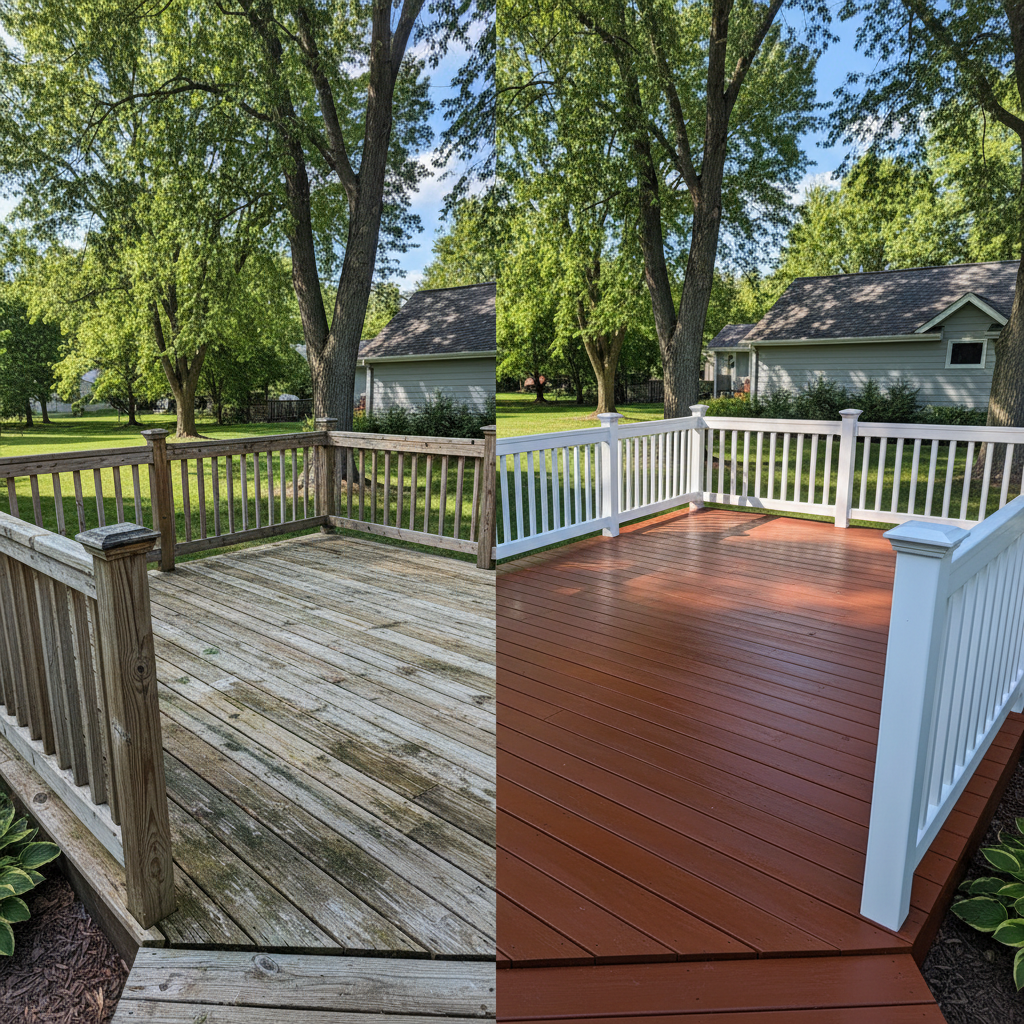
So, you've got a deck that's seen better days, or maybe you're just looking to refresh its look. The big question usually boils down to this: should you paint it or stain it? It's not just about color; it's about how much work you want to put in, how long it'll last, and what kind of beating it can take from our Minnetrista seasons.
I've seen countless decks around Lake Minnetonka and the surrounding areas, from the older, weathered cedar decks to newer composite ones. Each finish has its place, but they definitely aren't created equal, especially when you factor in our brutal winters and humid summers. Let's get into what you really need to know.
Deck Stain: The Natural Look & Feel
Stain is what most people think of when they want to protect their wood deck while still letting the natural grain show through. There are a few types, but generally, they fall into transparent, semi-transparent, and solid categories.
- Transparent and Semi-Transparent Stains: These are great if you love the natural look of your wood. They penetrate the wood, offering protection from UV rays and moisture, but they don't hide much. You'll see the grain, knots, and all the character of the wood. The downside? They don't last as long as solid stains or paint. You're usually looking at reapplying every 1-3 years for transparent and 2-4 years for semi-transparent, depending on sun exposure and foot traffic.
- Solid Stains: These are a bit of a hybrid. They're opaque, meaning they cover the wood grain completely, much like paint. But they still penetrate the wood, offering better adhesion and less peeling than paint. They're more durable than lighter stains, often lasting 3-5 years. If you want a uniform color but still want the benefits of a stain, this is your best bet.
Cost for Staining: Generally, staining can be a bit less expensive upfront than painting, especially if you're doing it yourself with a lighter stain. Professional application costs vary, but you're paying for prep work (which is crucial) and the product. The real cost comes in the more frequent reapplication.
Durability & Maintenance: Stains, especially the lighter ones, wear down rather than peel. This means less scraping and sanding when it's time to reapply. You'll usually need to clean the deck thoroughly, maybe do some light sanding, and then apply another coat. It's less intensive prep than paint, but you're doing it more often.
Deck Paint: The Bold & Protective Choice
Deck paint is exactly what it sounds like: a thick, opaque coating that sits on top of the wood. It completely covers the wood grain, giving your deck a uniform, often vibrant, color. Think of it like painting the exterior of your house.
Cost for Painting: Painting a deck usually costs more upfront. The paint itself can be pricier, and the prep work is absolutely critical and more labor-intensive. If you don't prep properly – cleaning, sanding, priming – that paint is going to peel, and you'll be starting over sooner than you think. But, it tends to last longer, often 5-10 years, which can save you money in the long run.
Durability & Maintenance: This is where paint shines, but also where it can be a headache. A well-applied paint job offers excellent protection against moisture and UV rays. It creates a hard, durable surface. However, when paint fails, it typically peels and chips. This means that when it's time to reapply, you're looking at a much more involved process of scraping, sanding, and potentially priming again. It's a bigger project when it comes due, but it's less frequent.
My Recommendation for Minnetrista Homeowners
Here's the deal: for most decks in Minnetrista, especially those exposed to the full brunt of our weather – the heavy snow, the freeze-thaw cycles, the intense summer sun – I almost always recommend a high-quality solid stain over paint.
Why? Because of how paint fails. When paint peels, it looks terrible, and fixing it is a huge pain. You're talking about extensive scraping and sanding to get a smooth, paintable surface again. It's a headache I wouldn't wish on anyone.
Solid stains, on the other hand, tend to wear down more gracefully. They fade, they thin out, but they don't usually peel in big, ugly flakes. This makes future maintenance significantly easier. You clean the deck, maybe do a light scuff sand, and then apply another coat. It's less work, less frustration, and your deck looks better for longer, even as it ages.
Plus, with a solid stain, you still get that opaque color coverage if you want to hide imperfections or change the look of your deck dramatically. You get the best of both worlds: the uniform appearance of paint with the easier maintenance and better adhesion of a stain.
Now, if you've got a brand-new, perfect cedar deck and you want to show off that beautiful grain, a semi-transparent stain is a great choice. But be ready for that more frequent upkeep. For older decks, or decks that are going to see a lot of traffic and weather, solid stain is the way to go.
Whatever you choose, remember that proper preparation is key. A good cleaning, repairing any loose boards, and making sure the surface is dry and ready to accept the finish will make all the difference in how long your deck looks great. If you're not sure where to start or need a hand with your deck project, give us a call at Alpha Decks. We're always happy to help our neighbors around Minnetrista get the most out of their outdoor spaces.